Everything comes back around eventually. Fashion does it. Music does it. And increasingly, the motor industry seems to be doing it too.
Look through today’s new-car market and you’ll find some very familiar names staring back at you. Capri. Puma. Mustang. Viva. Names capable of transporting many of us straight back to a very different era of motoring are appearing on our roads once again – although not necessarily on the sort of cars we remember them being attached to. And it’s not an entirely new phenomenon either. Manufacturers have been dipping into their back catalogues for years! But are we witnessing a genuine retro revival, or have car manufacturers simply realised that nostalgia sells?
The Capri is back… but not as we knew it!
Few names evoke British motoring nostalgia quite like the Ford Capri. Launched in 1969 and famously marketed as “the car you always promised yourself”, the original Capri brought a little slice of sports-car glamour within reach of the ordinary motorist. Long bonnet. Two doors. Rear-wheel drive. Plenty of attitude. It became one of the defining cars of its generation and remained in production until 1986.
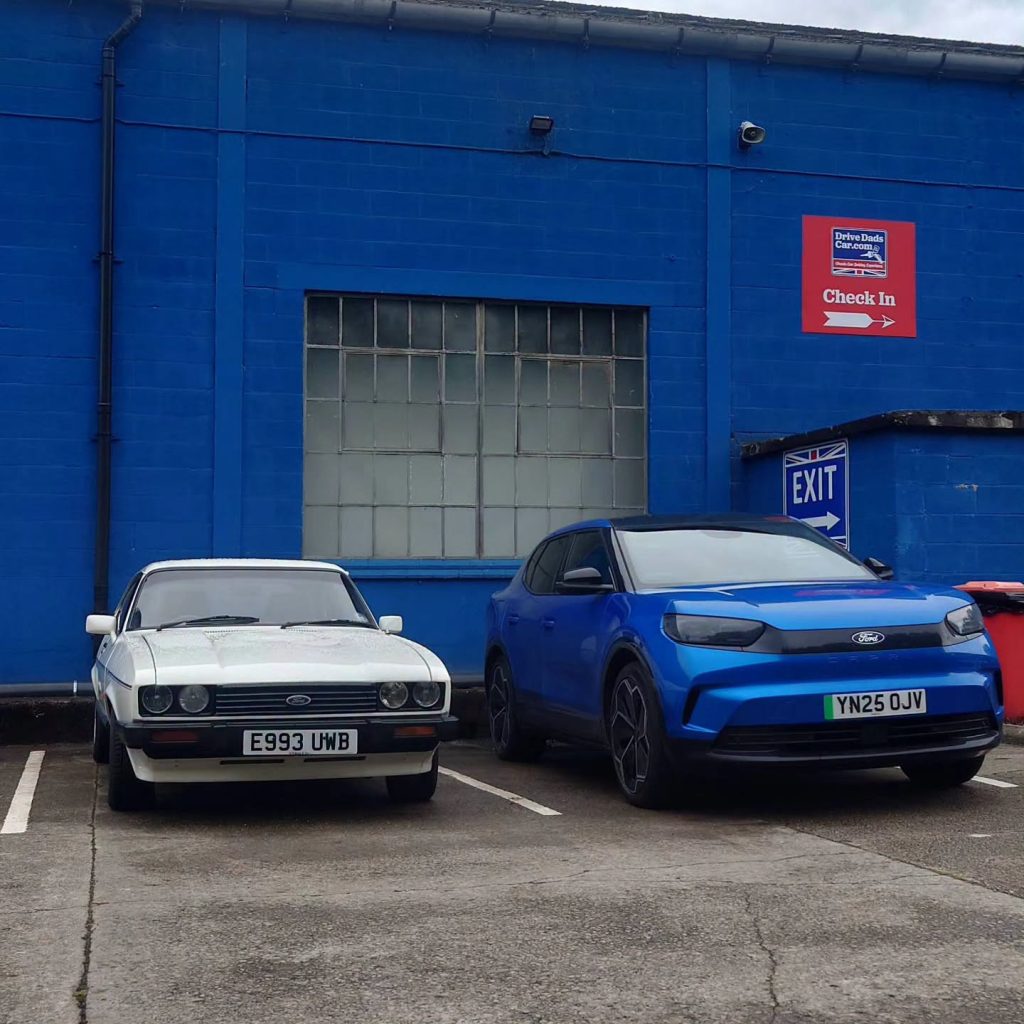
Fast-forward almost four decades and the Capri name is back, except this time, things are rather different. The new Capri is a five-door, all-electric crossover – a world away from the low-slung coupe that made the badge famous. Today’s Capri comes with large touchscreens, driver assistance technology and battery power rather than a burbling petrol engine. There are styling references to the original if you look for them, but park the two side-by-side and you’d be forgiven for wondering whether they really belong to the same family.. or even the same manufacturer!
Which raises an interesting question. Would the new car attract quite as much attention if Ford had given it an entirely new name? Or is the word Capri on the back doing some of the heavy lifting?
The Puma had already paved the way.
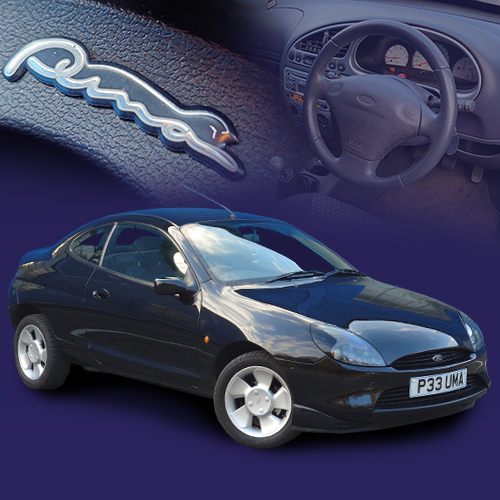
Ford had, of course, already performed a similar trick with another familiar name. The original Ford Puma, launched in the late 1990’s, was a small, affordable and rather entertaining little coupe based on the Fiesta.
Today, the Puma is a compact crossover. It’s a successful car in its own right, but apart from the blue oval and the name on the back, there’s not an enormous amount connecting it to the little coupe that came before it.
For those who remember the original though, seeing Puma written across a modern Ford triggers an instant memory. And perhaps that’s precisely the point.
Remember the Vauxhall Viva?
Here’s one that proves recycling a famous name isn’t purely a modern idea. For generations of British families, the Vauxhall Viva was a familiar sight. Introduced in the 1960’s, it became exactly the sort of everyday family car that filled British driveways, supermarket car parks and holiday routes. The Viva disappeared from Vauxhall’s range in 1979.
Then, more than three decades later, it came back.
In 2015, Vauxhall resurrected the Viva name for a small five-door city car. It wasn’t trying particularly hard to look like the original. It wasn’t a retro recreation. It was simply a completely new car carrying a very familiar old name. And once again, you have to wonder: why invent a new name when there’s one sitting in the archives that millions of motorists already recognise?
And then there’s Mustang…
We have to venture across the Atlantic for this one, but it’s too good an example to leave out. The Ford Mustang is one of the most recognisable performance-car names in the world. For decades, Mustang meant a long bonnet, petrol engine, rear-wheel drive and unmistakable American muscle-car attitude.
And then along came the Mustang Mach-E.
Electric. Five doors. SUV. You can probably imagine the reaction from some Mustang enthusiasts.
Ford could quite easily have launched its new electric SUV under an entirely new name. Instead, it attached one of the most valuable badges in its history. It’s perhaps the ultimate question we’re asking here: How far can you reinvent a car before the name stops meaning what it once did?

And it’s not just old model names…
Some of Britain’s most famous motoring brands themselves are being reimagined for a new generation.
Take MG. For many, those two letters conjure up images of small, characterful British sports cars – MGBs, Midgets and windswept Sunday drives. Today’s MG looks rather different, with SUVs, hybrids and electric cars now wearing the famous octagonal badge. Yet the arrival of the electric MG Cyberster, a two-seat open-top sports car, perhaps shows that some of the old spirit is still there – even if there’s now a battery under the bonnet!
Then there’s Lotus. A name built on lightweight, beautifully handling sports cars is now appearing on electric SUVs and four-door grand tourers – something that would have once been almost unimaginable. Alongside them, cars such as the Emira retain a much more obvious connection to the Lotus sports cars of old.
And perhaps that’s the bigger story behind this retro revival. The cars themselves may be changing beyond recognition, but manufacturers clearly believe there’s still some enormous value in the names, badges and memories we already know and love.
After all, creating a new car is relatively easy.
Creating a name people still care about 50 years later? That’s rather harder.
But we’ll still take the old one…
Of course, if you’re anything like us, you’ll probably agree that there’s still nothing quite like the oldies. You can add all the electric power, touchscreens, AI, driver assists and clever gadgets you like, but there’s something about an old car that modern technology simply can’t recreate.
The smell. The sound. The slightly questionable brakes. The steering that actually requires some effort. The unmistakeable feeling that you’re the one driving the car rather than the car doing half of it for you.
That’s all part of the fun!
But perhaps we’re biased.
So, if you’re still undecided about whether the originals really were better, there’s only one way to settle it.
Come and drive them.
Our Drive Dad’s Car fleet gives you the chance to get back behind the wheel of some of Britain’s best-lived classics and experience proper old-school motoring for yourself. No lane assist or fancy screens in sight!
What do you think?
Are you pleased to see famous motoring names making a comeback, or should legendary badges like Capri have been left in the history books?
And if you could bring back one classic car exactly as you remember it, what would it be?